
In discussions with museum leaders about understanding community goals, I sometimes get the sense that it doesn't matter what I say — They've already decided: "We need to wait until we have better data."
I understand why — The logic seems sound: Get your CRM in order, finish tagging members in the database, maybe introduce that new ticketing system … Get your house in order and then you'll be ready to understand your community's goals. It can be a comforting story because it feels responsible, strategic even.
But here's the thing: Even if your CRM exploded tomorrow, taking years of participant data with it, you wouldn't actually be any further from understanding how your community pursues their goals. Because that information was never in your database to begin with.
Last week, I was working with John Falk on a piece of the workshop we’re hosting with The Value Realization Collaborative participants this winter. We randomly selected “Help people feel connected to something bigger than themselves” as an example outcome to explore. We could have just as easily landed on “Allow users to feel physically safe, welcome, and secure”, “Heighten users’ senses”, or any of the other 21 potential outcomes in this part of the framework. If you're someone who likes to get a peek at messy work in progress, here's the frame we were discussing:
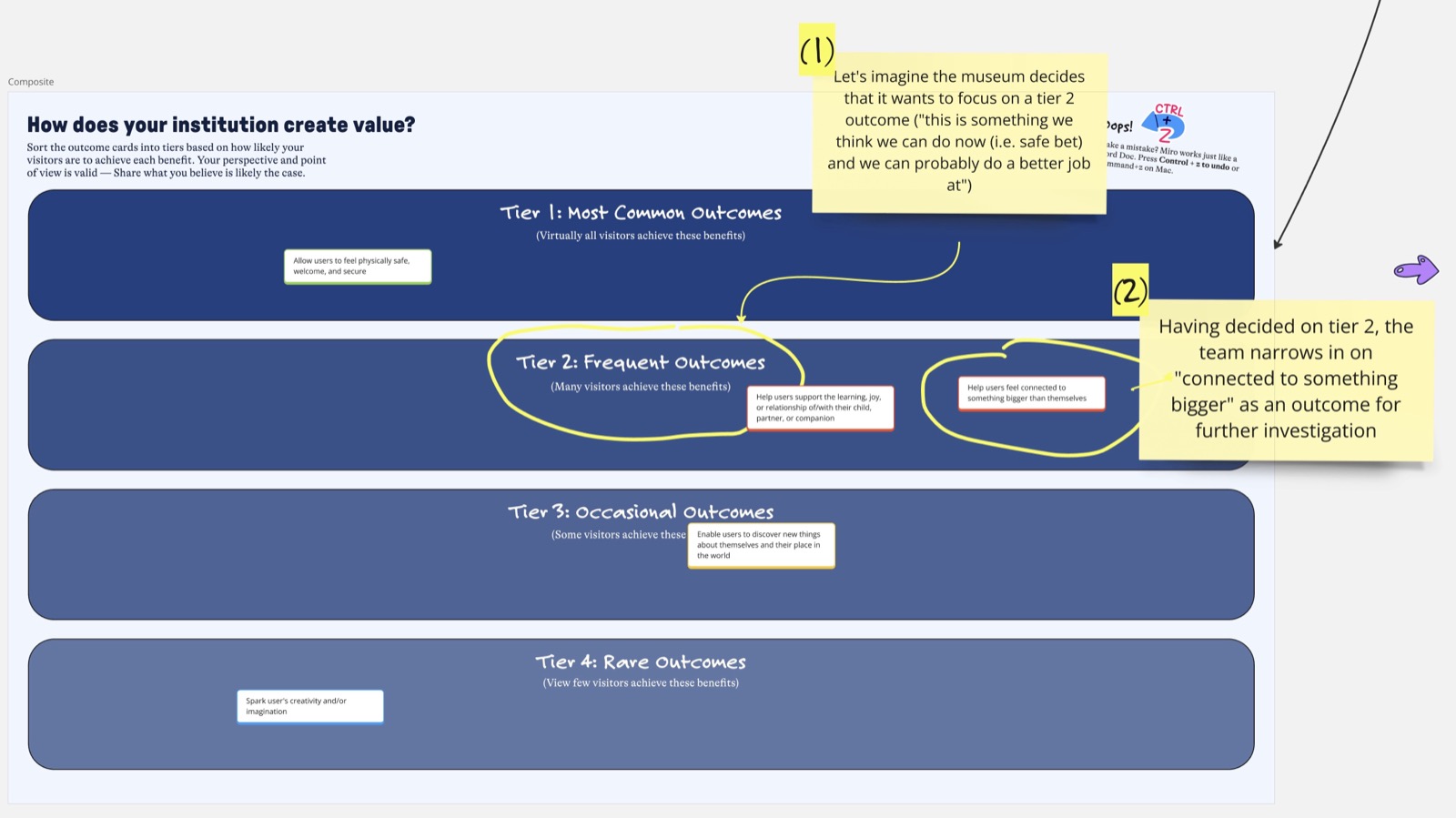
But here’s the question: Would any amount of CRM data or visitor tracking help a museum understand how to better support that outcome? Your database might describe which programs drew crowds or how many families attended workshops. But it doesn’t reveal anything related to that larger outcome or how people approach the related goals that lead to that outcome.
Perhaps more critically, better systems won't help your staff shift from focusing on their expertise to supporting community goals. A better CRM will not expose curators to how people actually think about connection and belonging in their daily lives. Better tracking won't help educators discover what makes someone feel safe and welcome in a new space.
This is why we structure listening sessions to include voices from outside museum walls — people who are not in your CRM, no matter which one you're using. We look for people pursuing expressions of these fundamental human goals, regardless of their relationship with cultural institutions.
The paradox is deliciously absurd: In waiting for “better data” before starting meaningful community research, museums prevent themselves from gathering the data that can actually drive transformation. It's like refusing to cook until you've alphabetized your spice rack.
There's never a perfect moment to start understanding your communities’ goals. Your CRM will always need cleaning. Your systems will always need updating. But meaningful insights don't emerge from perfecting your documentation of what already exists — they come from asking fundamentally different questions about what could be.
If you’d like to ask better questions, you can join us in The Value Realization Collaborative — Registration ends Friday.