
We all know that we are living through uncertain times. Museum leaders are particularly aware of these uncertainties. The swell of public sentiment favorable to museums that began developing in the late 20th century appears to be subsiding. Although museums remain popular leisure education destinations, the nearly exponential growth in the numbers of museum users has flattened out and already pre-COVID, attendance at many institutions was actually declining.1 Financial support for the museum sector too has seen significant changes. Support from both governmental and private sources has weakened, and even once reliable funders have become increasingly unpredictable.2 Collectively, the museum sector is well aware of these many challenges and most fully understand the need for change. But in what ways, and to what ends remains challenging.
It is in this context that over the past several years I have sought to take the pulse of the museum community to identify how museums might most effectively position themselves for long-term sustainability and success. To this end, I have invested countless hours in trying to better understand and measure both the current value museums create for their communities, as well as how that value can be increased. As part of this process, I have read extensively as well as informally talked with several hundred museum leaders from around the world. In addition, I initiated a small research project that involved formal interviews with more than fifty museum leaders to learn more about how they perceive the value of their institutions and what they are currently doing to maximize that value. At the same time, I have conducted, or am in the process of conducting, several large-scale audience research studies designed to measure the public’s perceptions of museum value. These studies have involved tens of thousands of museum users from more than four dozen museums, across eight different countries.
What I discovered is both encouraging and discouraging. First the encouraging news. Based on my empirical audience research studies, it is clear that museums generate an amazing amount of value for their current users.3 Virtually everyone who currently visits a museum leaves with measurably enhanced personal, intellectual, social, and physical well-being; value that typically lasts for days or even weeks or months. Further, these enhancements in well-being can even be monetized, with results indicating that museums cost-effectively deliver significant financial and social value to their communities.
The discouraging news is that despite virtually all the museum leaders I spoke with being committed to becoming more user focused, most seemed incapable of clearly articulating how they plan to achieve this user focus. Although all leaders expressed a commitment to supporting user value, only a tiny fraction seemed to completely understand the nature of the value they already currently create for their users, let alone what it would take to enhance this value. A surprisingly large percentage of leaders seemed to still be mired in outdated, dare I say, overly grandiose, 20th century conceptions of museum value, most failing to grasp the most fundamental reality of value creation – that it is users, not the institution, that determine whether a museum is creating value. Stated bluntly, it does not matter if museum staff or even the trustees think the museum is accomplishing great things. These opinions are nice, but ultimately irrelevant. The only thing that really matters is whether the majority of the community actually feels the museum is relevant to them, that these community members actually engage with the museum, and that when they do, they perceive their time was well spent, that their needs and expectations were met, and that their personal, intellectual, social, and physical well-being was enhanced.
So how to ensure that the museum delivers value to all its various constituencies? What kind of process should museums utilize that would enable them to expand and diversify participation, and then ensure that those who do engage with the museum fully meet their well-being-related needs and expectations? The answers to these questions do not start with the museum. It is not about collections, or expertise. It is not about creating the next great exhibition or program. The solution to how to serve the needs of a diverse 21st century community, how to ensure your museum has value, begins with users. Only after understanding what it is that the public finds relevant to their lives, as defined by their needs and wants, only after determining how other resources in the community are already supporting those community needs and wants, only then should a museum start thinking about its purpose and how it should shape and produce its products and services. Finally, at the very end of this process, after all the above has been accomplished, only then should the museum think about crafting its mission and strategic approaches.4 The modern manifestation of this “bottom-up” way of thinking is referred to as a value realization process.5 Value realization is a process that strives to always put fulfilling user needs at its core. In fact, the goal of value realization is not just to merely meet user needs, but always to exceed user expectations. Value realization is a process designed to build long-term user loyalty, and through that process, create measurable and sustainable organizational value.
Value Realization
Implementing a value realization process typically involves multiple steps, with each step focused on a different aspect of the value creation process. Value realization is a cyclical process, rather than the traditional, linear, top-down strategic development approach – there is no real beginning or end, just an on-going endless, virtuous cycle of action and reflection, and then more action and more reflection. Although many have defined the steps or stages in this process using six or even eight steps,6 I have defined this process as involving just four key steps.
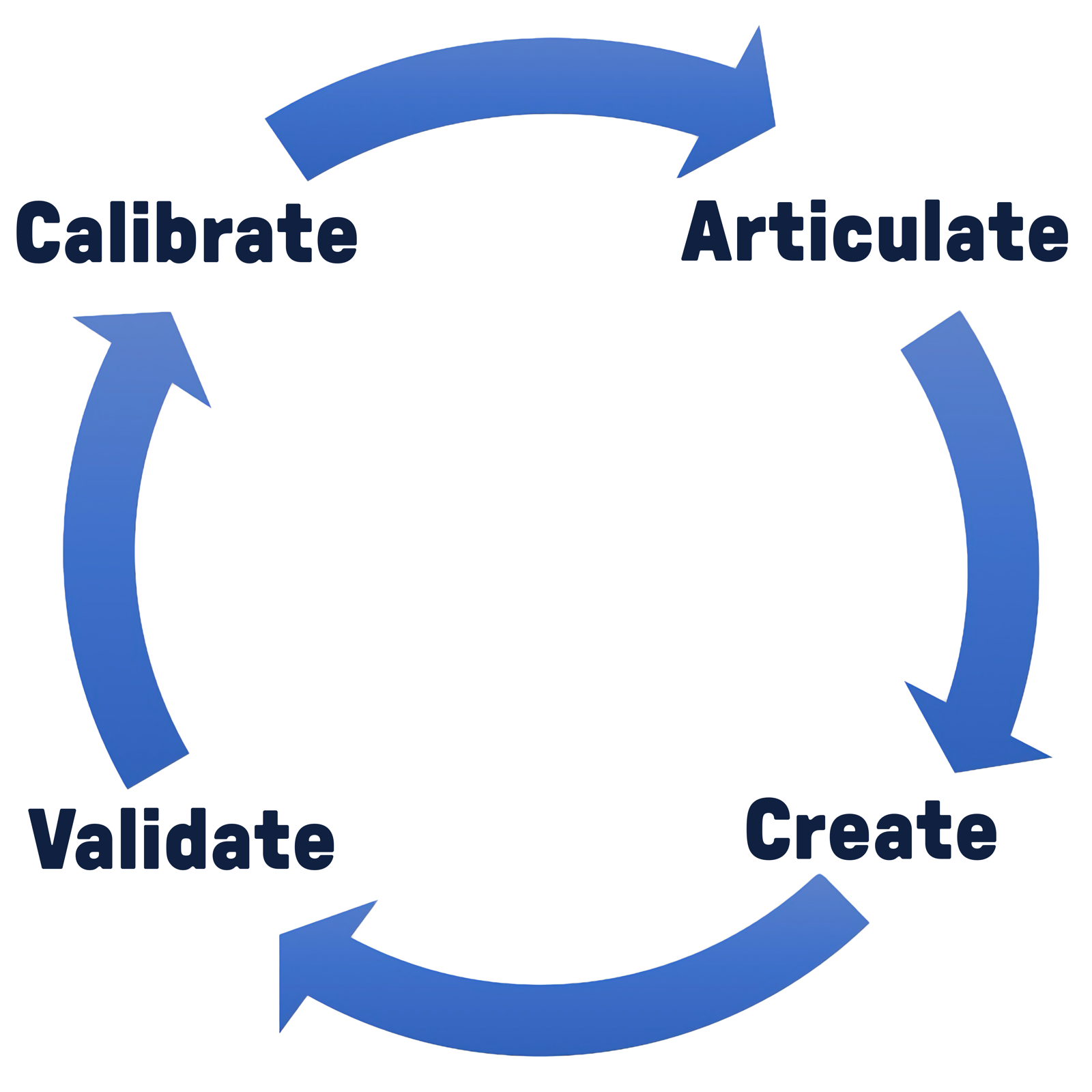
Image: The Value Realization Cycle: A circular diagram showing four key steps - Calibrate, Articulate, Create, and Validate - illustrating the cyclical nature of value creation in museums.
Throughout the value realization process, the over-arching goal is to ensure that every one of the museum’s various users feel positively about their experiences. But as stated above, this is not a linear, “figure it out and create” approach to value. It is equally important to both validate that value has been created, and then (re-)calibrate one’s approach. It is also essential throughout the process to ensure that all parties understand what that value looks like. One of the key principles of the value realization approach is that not only must users benefit from their interactions with the organization but that users also need to be aware of and appreciate the receipt of benefits. Although museums are already fairly good at creating well-being-related value and virtually all current museum users really do achieve some measure of enhanced well-being from engaging in museum experiences, most museums only serve a small percentage of their communities, and even amongst these users, relatively few fully understand or appreciate the nature or the full extent of the benefits they receive from utilizing the museum.
Calibrating Value
Before attempting to implement value, before a museum can hope to create experiences that support the public’s well-being, the museum must first seek to understand what kinds of well-being-related value they should be supporting, and in what form. To do this effectively, museums need to engage and listen to their users. This is not to say that museums need to try and accommodate everything and anything users desire, but it does mean that they should listen to how current experiences provide benefit, as well as in what ways experiences currently fall short of supporting what people say they need. They need to understand who currently uses museums and for what purpose as well as why so many people do not currently engage with the museum, and why. This must be the starting point for determining how best to provide value to one’s community.
Articulating Value
Museums create multiple types of public value, but often are not very adept at articulating this value. The evidence suggests that museums serve not a single type of user, nor a single type of outcome, but rather multiple users and multiple value outcomes. Thus, it is not possible for a museum’s purpose to be encapsulated in one sentence. For optimal results, each organization needs to create multiple customized statements of purpose; each reflective of the specific, unique needs and realities of each of its key constituencies. Each such statement must include three key components:
To whom do you provide benefits, i.e., how are you defining this key constituency (NOTE: it is not just “the public”)?
What are the specific benefits you are delivering to these key constituents?
Why you? What is it about you and what you are providing that makes you different/ better/ unique from the other alternatives in the community?
To be successful, the museum must also be able to articulate this value, these goals, to their publics in such a way that everyone in the process – board, staff and particularly users – all equally understand what the value is that is being created by virtue of this relationship. To be effective, all communications with users should always be framed from the user’s point of view, not the museum’s. In other words, communications should not focus on what the museum is doing or exhibiting but rather how the user will benefit from engaging with the museum.
Creating Value
When a person is trying to decide how to spend their weekend, or a schoolteacher is trying to decide whether to participate in a museum-run program, they are looking to solve a problem. They are seeking to satisfy one or another well-being-related need. Perhaps they are seeking someplace to go that can help them feel good about themselves, reinforcing their self-identification as a curious person. Or perhaps they are trying to find an educationally redeemable setting in which to spend quality family time. Or perhaps they are struggling to fulfill a particular curricular need and are wondering if the time and expense required for a fieldtrip will be cost-effective and worth the hassle. These value expectations drive them to investigate various options and determine which of these various options might best meet their needs. Museum-going/use is never the only option, so the museum must meet users’ expectations throughout every step in the users’ museum journey – before, during and after use.
Value delivery involves engaging people fully in unique experiences that support and enhance their well-being-related needs and interests. Value delivery also involves allowing museum users to have agency and choice and control, enabling users to become co-creators and co-inventors of their experiences. Ultimately, appreciating that all museum users are seeking to enhance their personal, intellectual, social, and physical needs, as well as appreciating the unique affordances of museum experiences, make it possible for museum staff to create programs and experiences that not only ensure the delivery of short-term satisfaction but also the creation of long-term meaning and on-going usage.
Validating Value
However, believing that one has created value for users should not be confused with knowing that one has created value. That kind of certainty requires empirical documentation, it requires evidence of success. And evidence of success requires the ability to clearly define what success looks like in the first place.
In the coming years, museums will need to commit to become increasingly evidence driven, increasingly committed to data-based decision making. For an institution to confidently know that it has created value requires defining tangible outcome metrics, and then regularly assessing whether those outcomes have been achieved. Developing useful metrics of success is ultimately the key to developing indicators of success, which in turn can be used to drive incremental improvement in the value museums deliver. However, to be useful, such metrics need to align with the museum’s audience-driven value realization efforts. What is needed are measures of value capable of capturing the entire user journey – from the moment a user considers using a museum resource, through the actual use of the resource, and continuing long after that use has been completed.
Conclusion
Although a value realization process can be challenging to implement, when an organization successfully implements this kind of process, the result will be that all participants, both inside and outside the organization, perceive their relationship as valid and generative of something of real value. If museum leaders can begin to successfully implement this kind of value realization process, then they can look forward to a time when all their various constituencies feel a greater sense of satisfaction and a greater sense of loyalty towards them; a loyalty made visible through their desire to actively seek opportunities to be engaged with the museum again and again in the future. User loyalty is the ultimate key to ensuring long-term institutional vitality and sustainability.
The journey towards becoming a truly user-centered museum is ongoing. As we continue to explore the nuances of validating museum value, we invite you to join the conversation and share your thoughts on implementing these principles within your institution.
End Notes
1 National Endowment for the Arts. (2019). U.S. Patterns of Art Participation. Washington, DC. NEA file:///C:/Users/14432/Downloads/US_Patterns_of_Arts_ParticipationRevised-1.pdf
2 Govan, M. (2013). The Art Museum Today, in Discussion, Unpublished Ms. A white paper following a gathering of art museum directors at the Aspen Institute, March 2013, to discuss the future of the art museum in a changing world.
3 cf., Falk, J.H. (2022). Making the case for the value of museum experiences. Museum Management & Curatorship, 37(5), 455-470.
Falk, J.H., Claudio, N. & Meier, D. (2022). Measuring the public value of Finnish museum experiences. Technical Report. Beaverton, OR: Institute for Learning Innovation. http://www.instituteforlearninginnovation.org/wp-content/uploads/2022/11/Measuring-the-Public-Value-of-Museum-Experiences-FINAL-REVISED.pdf
Falk, J.H., Claudio, N., Meier, D. & Koke, J. (2023). Measuring the public & economic value of art museum experiences. Technical Report. Beaverton, OR: Institute for Learning Innovation. 4 Levitt, T. (1960). Marketing myopia. Harvard Business Review, 38(4), p. 41-42.
5 Sharma, I. (2022). Is value realization the secret to customer lifetime loyalty? CMSWire. https://www.cmswire.com/customer-experience/is-value-realization-the-secret-to-customer-lifetime-loyalty/ Accessed May 23, 2023.
6 e.g., Liozu, S. (2022). Value realization: The fundamentals. https://www.decisionlink.com/blog/value-realization-the-fundamentals Retrieved May 18, 2023.
Sharma, I. (2022). Is value realization the secret to customer lifetime loyalty? CMSWire. https://www.cmswire.com/customer-experience/is-value-realization-the-secret-to-customer-lifetime-loyalty/ Accessed May 23, 2023.
Wolf, P. (2024). Value realization framework in SaaS: A strategy to exceed customer expectation. https://www.custify.com/blog/value-realization-process-saas/ March 24, 2024.