
Note: This is an updated version of a post published in October 2019, which seems to be a first ever mention of the phrase “Museums-As-Progress”.
Ask a museum professional to describe their audience or community, and you're bound to hear a demographic description. It's odd because cultural professionals are often sensitive to stereotypes and genuinely concerned about racism, ageism, and sexism — Why would they define their audiences or communities in a way that risks reinforcing prejudices or stereotypes?
Aren’t there other ways to define museum audiences that could lead to more meaningful engagement and impact?
Types of Goals: A Lens for Understanding Audiences
Goal types are not a way to define audiences, but they can help us think about how we’re choosing what matters to museumgoers. This can help us figure out where we’re spending our resources.
A few weeks ago, I wrote about Alan Cooper's different types of user (audience) goals:
Experience goals: How someone wants to feel when using a product, service, or organization.
End goals: What someone wants to get done by using a product or service or "hiring" the organization.
Life goals: Why someone wants to use a product or service — their deeper motivations and drives. In Jobs To Be Done terms: What progress is the individual hoping to make by hiring the organization, its products or services?
(These correspond to Don Norman's three levels of cognitive and emotional processing: Visceral, Behavioral, and Reflective.)
Example: Jane is an art student who visits an art museum one day to complete a drawing assignment.
Experience goals: Jane wants to find a specific painting she's looking for; she wants to be able to focus while she's working; she may want to be able to sit down while she works; she wants the bathroom to be clean, and so forth.
End goal: Jane needs to complete her homework.
Life goal: Jane wants to become a better artist and prepare for a successful career. This is the progress Jane is seeking — the change in her life she wants to realize, which fuels the finish-my-homework end goal.
Most organizations focus their attention and resources on experience and end goals. "How was your visit to the museum?" is a relatively easy question to ask, and the responses are easier to understand and track over time. But experience and end goals are only a portion of what the visitor may value. And they may be the least important in the big picture.
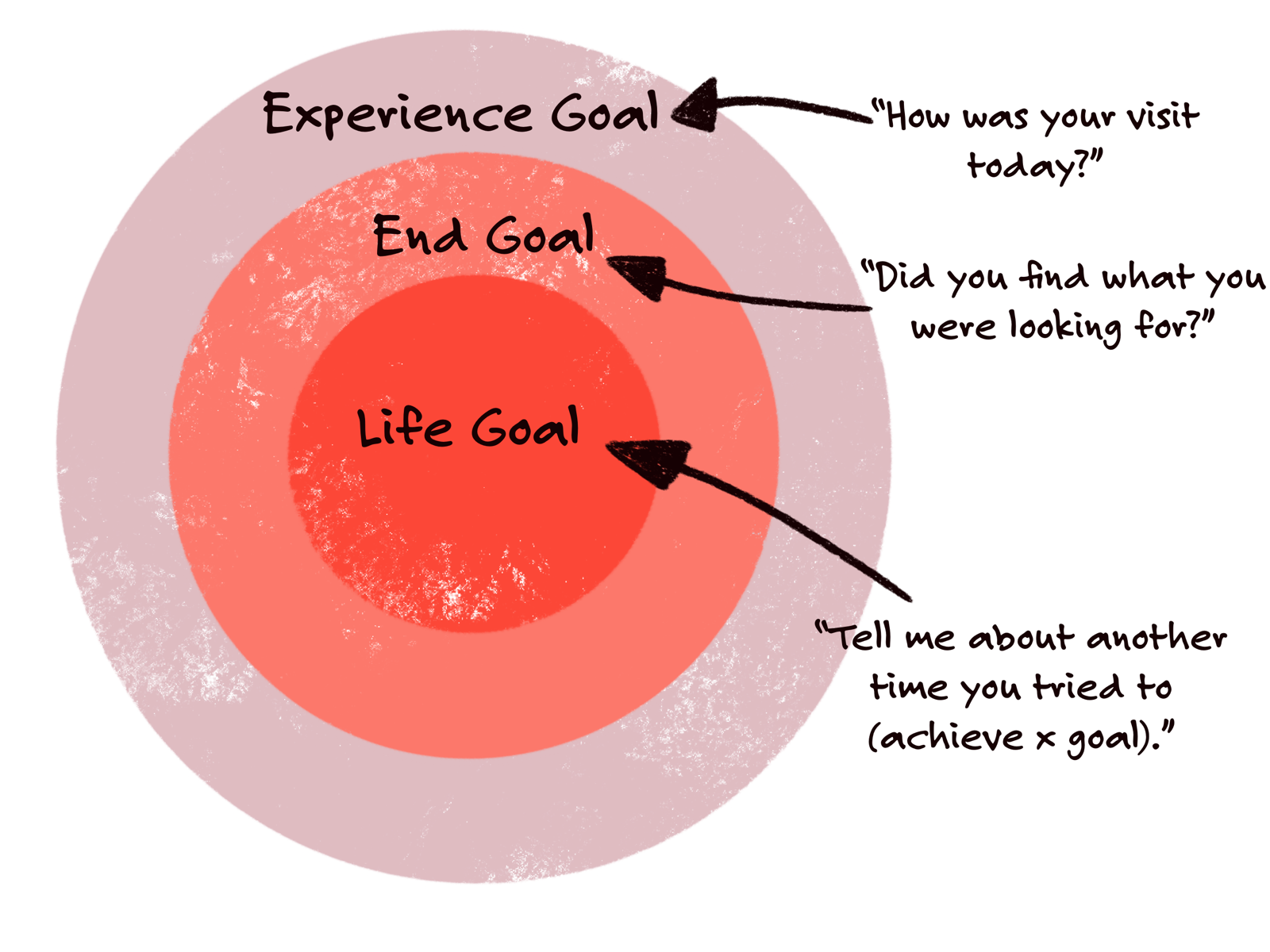
The life goal is the core — it motivates Jane to pursue her end goal and evaluate her visit in terms of experience goals.
Are We Measuring What Matters Least?
Looking at it this way, we could think of experience goals as the least important thing we can measure or study. William Powers' hierarchy of goals, which I found while reading Alan Klement's article on Jobs to be Done, supports this idea:
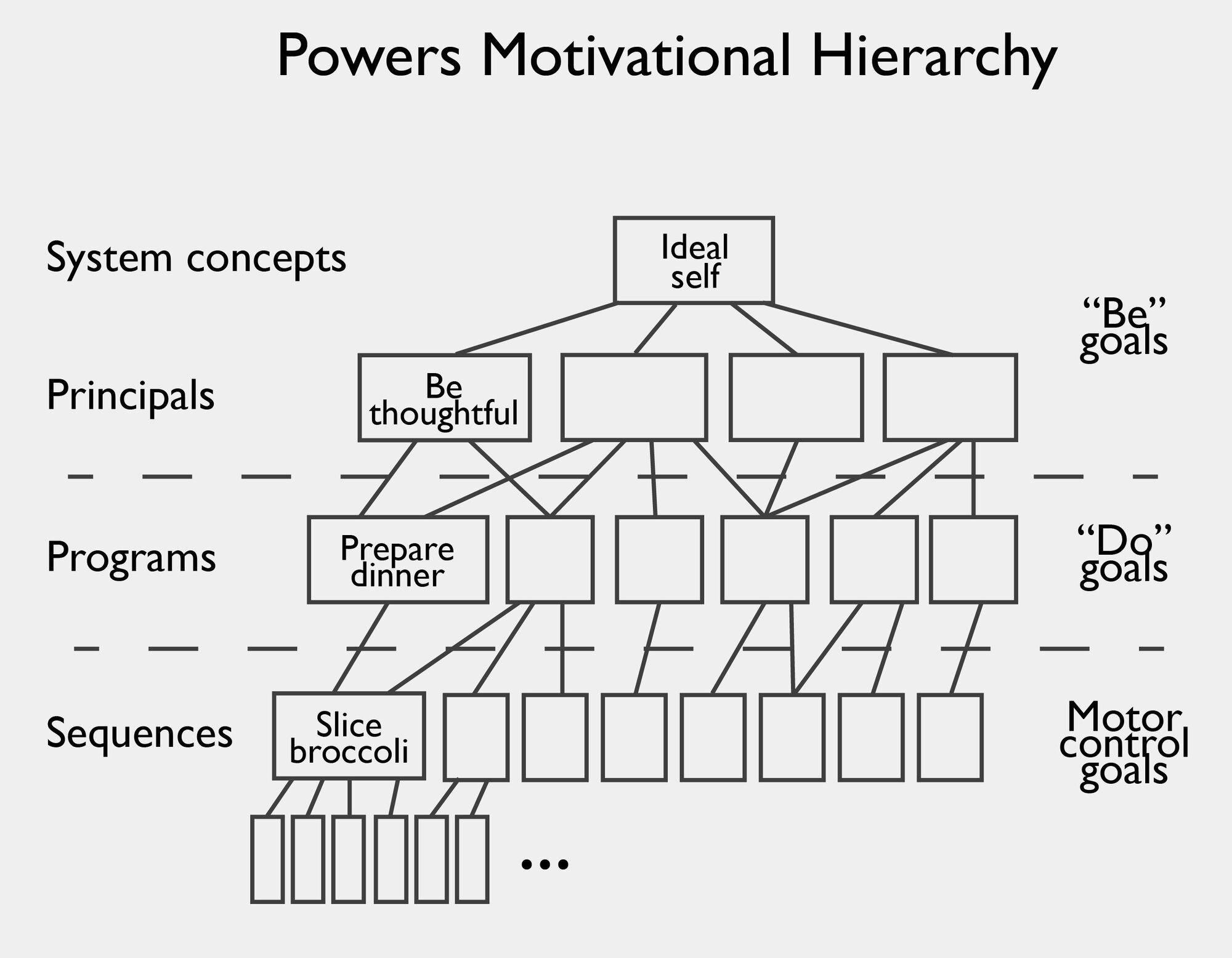
Principals help the individual strive for an ideal self (Life Goals / Be Goals)
Programs are activities that support those principles (End Goals / Do Goals)
Sequences are small steps along the way that support programs. (Experience goals / Motor Control Goals)
Klement writes:
"Be" goals [life goals] have the highest priority; Motor control [experience] goals have the lowest. Be [life] goals are the core drivers of all our actions and decisions. This also means that, no matter how well a Do [end] or Motor Control [experience] goal is fulfilled, it's a failure if the higher Be [life] goal is not satisfied. It also means that a Do [end] goal doesn't have to be successfully executed to fulfill a Be [life] goal.
Applying this to Jane — The museum could help her make some progress toward her life goal, even though one day the building is too cold and the bathroom smells. She may continue to hire the museum despite a grumpy guard, so long as she's progressing toward her life goal and she can't find a better alternative to the museum.
The museum's advantage then may lie in devising ways to help Jane make progress in her journey, not so much in improving her visit.
Rethinking Visitor Motivations
John Falk's work on visitor motivations in Identity and the Museum Visitor Experience provides another perspective on understanding audiences beyond demographics. He identified five types of visitors:
Explorers: Visitors who are curiosity-driven, looking to learn something new.
Facilitators: Visitors who are socially motivated, enabling others' experiences.
Professional/Hobbyists: Visitors who feel a close tie between the museum content and their professional or hobbyist interests, motivated by a content-related goal.
Experience Seekers: Visitors who see the museum as an important destination.
Rechargers: Visitors seeking a contemplative, spiritual or restorative experience.
While this framework is useful, we can always dig deeper by asking "Why?" For example:
Why do rechargers seek refuge from the world?
What progress does the museum help them achieve at an identity level?
Why the museum and not some other place, like the park or the beach?
Museums-As-Activities versus Museums-As-Progress
Drawing from Klement's article on two interpretations of Jobs To Be Done, we can contrast two ways of thinking about museum visits:
Museums-As-Activities model: Suggests that people visit museums because they want to "engage" with the museum. Therefore, efforts should focus on improving the visitor experience.
Museums-As-Progress model: Suggests that visitors don't want to "engage". They want to make a positive change in their life — i.e., progress. Therefore, efforts should focus on helping them make that change. Ideally, visitors wouldn't have to do any work.
This difference is crucial. The Museums-As-Activities model assumes visitors want to learn or engage, without exploring why they seek these experiences. A Museums-As-Progress model might dig deeper into visitors' motivations and life goals.
Three Ways of Thinking About Museum Audiences
To summarize, we can think about museum audiences in three main ways:
Demographics: Useful for some purposes (e.g., advertising); Potentially detrimental to understanding audience motivations and ways that the museum can serve on a deeper/progressive level.
Activity-driven: Focused on end goals and activities; Often measured in terms of satisfaction during a single visit.
Progress-driven: Focused on life goals and states of being, Measured in terms of the individual's life journey and identity.
While each approach has its place, the progress-driven model offers the most potential for creating meaningful, lasting impact. By understanding the progress visitors are trying to make in their lives, museums can align their offerings and measure success in ways that truly matter to their audiences.
How might your museum change if you focused less on demographics and visit satisfaction and more on supporting visitors' life goals and progress?