
Surveys are essential for gathering museum visitor and member insights as part of a mixed methods approach to research. However, one of the biggest challenges of surveys is a low response rate. When it comes to surveys, a high response rate is critical to ensure an adequate sample size—a must have for statistical validity. Moreover, with a stronger response rate, the data collected will be more representative, leading to more reliable conclusions.
To maximize the impact of your next survey, I’m sharing a three-part series on the best practices for boosting survey response rates.
Part 1: Launching the Survey
Announce the Survey in Advance
One of the most overlooked tactics in launching a survey is sending an “announcement email.”
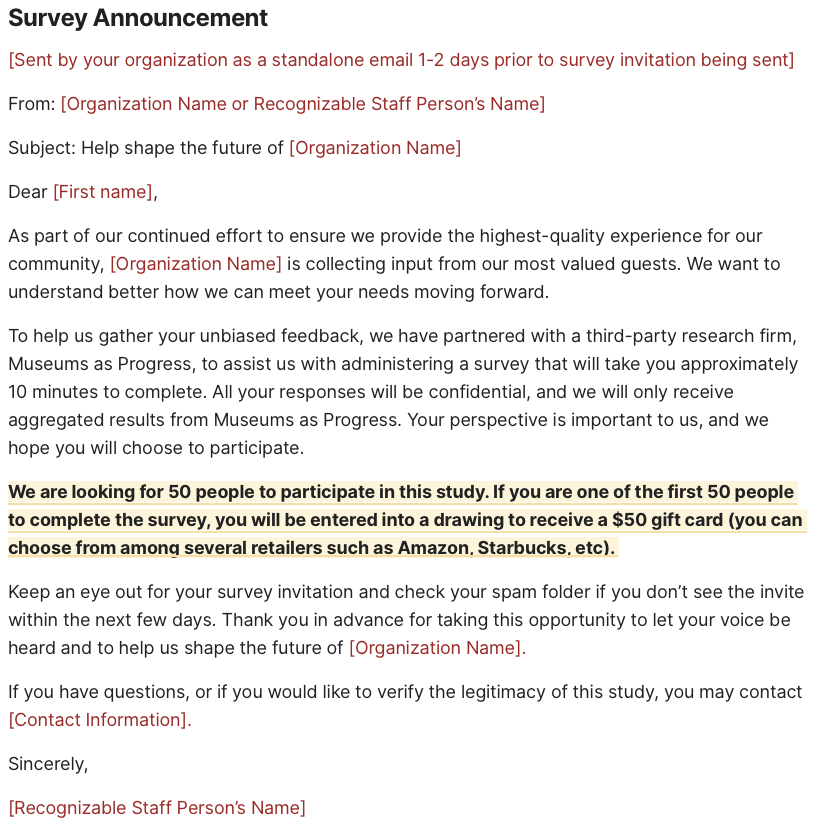
Announcing a survey in advance helps to set expectations and encourages participation. Here are a few best practices for a survey announcement email:
Clear Subject Line: Use an attention-grabbing subject line that clearly indicates a survey is coming, such as "Help Shape the Future of XYZ Organization"
Explain the Purpose: Briefly describe why the survey is being conducted, how the results will be used, and why the recipient’s input is important.
Highlight Benefits: Let the recipients know how their participation will benefit them, whether through improvements in the museum experience or membership services.
Set Expectations: Mention when the survey will be sent, how long it will take, and if there are any incentives for participation.
Reassure Confidentiality: If applicable, reassure participants that their responses will be anonymous or confidential to build trust. More on this in Part 2.
Call to Action: Encourage recipients to watch for the survey in their inbox and participate once it arrives.
Tone: Keep the tone positive, polite, and motivating to create anticipation.
Timing: Send the announcement email approximately 1-3 days before the deployment of the survey.
Below is an example of an announcement email that was sent as part of our recently launched Lab on Community Goals and the Purposes of Membership.
2. Craft a Clear and Engaging Survey Invitation
You’ve built anticipation with the survey announcement, now it’s time to send your survey invitation. It’s important to make the survey invitation concise, personalized, and compelling.
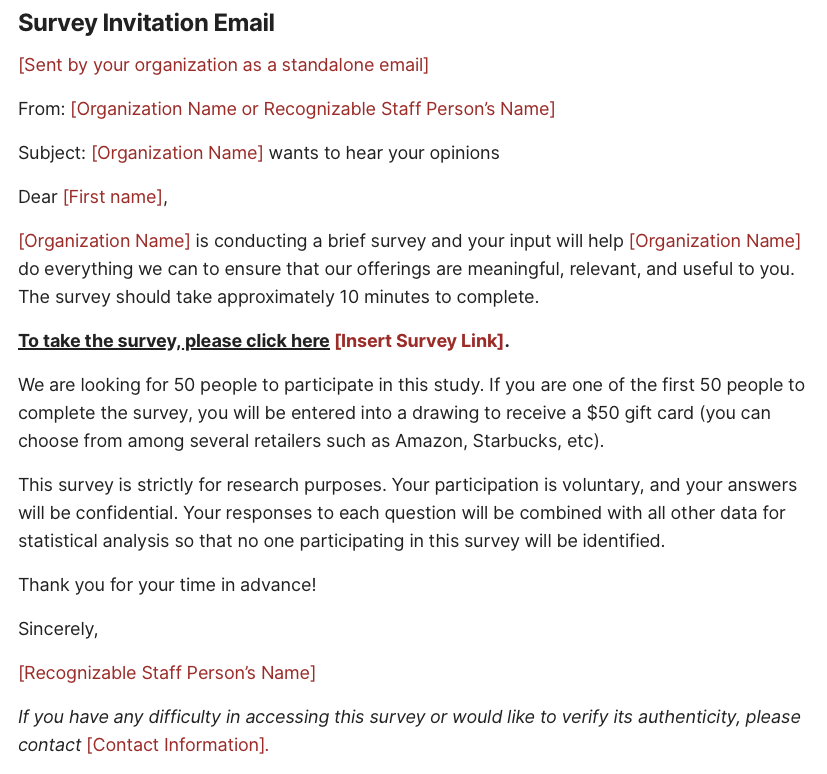
A few tips for writing an effective survey invitation:
Be concise: Keep your message short, clear, and to the point. Overloading your invitation with too much information may lead to disengagement.
Personalize the message: Use the respondent’s name or mention specific details relevant to them such as being a member. A personalized invitation feels more genuine and will boost response rates.
Explain the purpose: Clearly communicate why the survey is important and how their input will make a difference. Start with a friendly greeting and briefly explain the purpose of the survey, highlighting its importance and how the results will be used. People are more likely to respond if they feel their opinion matters.
Provide an incentive: Offering incentives like a drawing, gift card, or entry into a drawing for a prize pack can significantly boost participation. Just make sure the reward is relevant to your audience.
Send the survey invitation as a standalone email: Make sure that the survey invitation is sent as its own email without any other competing information or calls-to-action.
Make the Sender Name is recognizable: Send the announcement email from a recognizable staff person’s name (e.g., the Membership Manager) or from the Organization.
Ensure a clear call-to-action: Include a clear call-to-action, such as a link or button, to encourage immediate participation in the survey.
Reference a contact person: Include a specific person’s contact information should anyone have difficulty in accessing the survey or would like to verify its authenticity.
Below is an example of a recent survey invitation email that was sent as part of our recently launched Lab on Community Goals and the Purposes of Membership.
Send a Reminder Email!
Survey invitations are often met with good intentions but can easily slip through the cracks of a busy inbox. This is when a well-crafted reminder email can make all the difference. Sending a reminder email is one of the most effective ways to boost survey response rates and ensure that you gather the valuable feedback you need.
Even with a compelling survey invitation, many recipients may forget to participate or may not have had the time when they first saw the survey invite. A reminder email will gently nudge them to respond, increasing the likelihood that they’ll complete the survey. Research consistently shows that sending reminders can significantly increase response rates, even doubling the number of responses.
Reminder emails are a simple yet powerful tool for increasing survey response rates. Remember, people are busy, and sometimes all it takes is a gentle nudge to get the responses rolling in. Reminder emails work because they help to:
Overcome forgetfulness: People are busy, and a simple reminder helps bring the survey back to their attention.
Signal urgency: Sending a reminder suggests that time is running out, helping to motivate action.
Show commitment: Reminders demonstrate that you’re serious about collecting feedback, encouraging recipients to share their input.
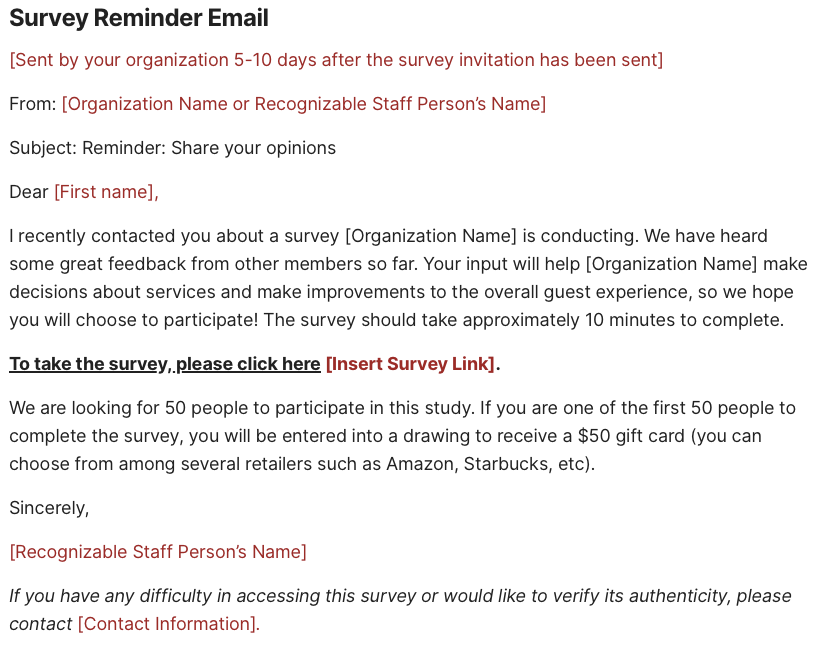
When writing a reminder email, keep the following best practices in mind:
Personalize When Possible: Addressing recipients by their name and/or referring to the survey can create a stronger connection.
Keep It Short: Reminder emails should be direct and to the point. Remind them of the survey’s purpose, highlight its importance, and include a clear call to action (CTA) to complete it.
Restate the Benefits: Let recipients know why their participation matters. Mention the positive impact their feedback will have and highlight any incentives they’ll receive for participating.
Use a Friendly, Polite Tone: Remember, you’re asking for their time and effort. Be polite, grateful, and enthusiastic about hearing from them.
Create a Sense of Urgency: If the survey has a deadline, mention it in your reminder. Use language like “Only a few days left to share your feedback!” or “Don’t miss your chance to help us improve!” The timing of your reminder emails is crucial. You want to strike a balance between giving participants enough time to act and not waiting too long before sending a follow-up. Here’s a general guideline: Send the reminder 5–10 days after the initial invite. This is enough time for recipients to either complete the survey or forget about it.
Make It Easy: Include a clear and easily accessible link to the survey. Reiterate how long it will take to complete the survey (e.g., "Only 5 minutes of your time") to reassure participants that it won’t be a burden.
Below is an example of an email reminder that was sent as part of our recently launched Lab on Community Goals and the Purposes of Membership.
Looking for more best practices on surveys? Stay tuned! Next week, I’ll share more tactics for boosting survey response rates, including best practices on incentives, survey length, and privacy.